
Understanding Tongue-ties and Lip-Ties

UNTANGLE THE TIES
Early Detection of Tongue And Lip-Ties Can Help Little Mouths Thrive!
As a parent, watching your baby struggle with feeding can be stressful. Tongue-tie and lip-tie are common conditions that can make breastfeeding and bottle-feeding challenging, but with early intervention, your baby can experience smoother, more comfortable feeding.
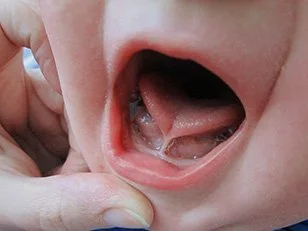
WHAT IS TONGUE TIE?
Tongue-tie, also called ankyloglossia, occurs when the membrane beneath the tongue (the lingual frenulum) is unusually tight, restricting tongue movement. While all babies have this tissue at birth, about 1-10% of newborns have a frenulum that is tight enough to affect feeding.
Tongue-tie can impact:
Breastfeeding (poor latch or difficulty sucking)
Eating solid foods
Speech development
Swallowing
Tongue-tie is classified into four types (I-IV) based on the location and appearance of the frenulum. Types I and II are anterior (near the tip) and usually mild to moderate, while Types III and IV are posterior (further back) and more severe.
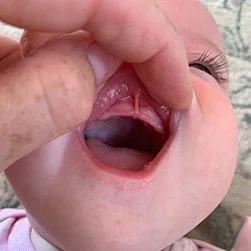
WHAT IS LIP-TIE?
A lip-tie happens when the membrane connecting the upper lip to the gums is unusually tight. Many babies with tongue-tie also have a lip-tie, which can make it difficult to create a proper seal while feeding.
Not all lip-ties cause problems—some loosen naturally over time. However, in more severe cases, they can contribute to feeding difficulties. Severity ranges from mild (flexible tissue) to severe (tight connection to the gumline).
SIGNS AND SYMPTOMS
Some babies manage well despite tongue or lip ties, but others show feeding challenges. Signs may appear in both baby and mother:
In Babies:
Noisy sucking or clicking sounds
Difficulty staying latched
Slow or poor weight gain
Excessive gas, reflux, or colic
Coughing or gagging
In Mothers:
Nipple pain or cracks
Flattened nipples after nursing
Engorgement, clogged ducts, or mastitis
Low milk supply
Difficulty holding a pacifier
Since these symptoms can have many causes, a professional evaluation by an IBCLC (International Board-Certified Lactation Consultant) or pediatric dentist is important.

TREATMENT OPTIONS
If a tongue or lip tie is affecting feeding, laser correction is a safe and effective solution. At Cache Valley Pediatric Dentistry, we use advanced cold-cutting lasers to minimize discomfort, reduce bleeding, and promote fast healing. Most babies relearn proper latch within a few days or very quickly after the procedure.
Fast, precise, minimally invasive procedure
Suture-free with quick recovery
Most babies relearn proper latch within a few days
WE’RE HERE TO HELP
If you suspect your baby has a tongue-tie or lip-tie, don’t wait. Our team at Cache Valley Pediatric Dentistry is dedicated to gentle, expert care to support your baby’s feeding and overall development.
Schedule a consultation today and take the first step toward a smoother, more comfortable feeding journey for both you and your baby!